Let them come to you
Stay relaxed and give your dog room to approach. Avoid leaning over them, grabbing their collar or putting your face close to theirs.
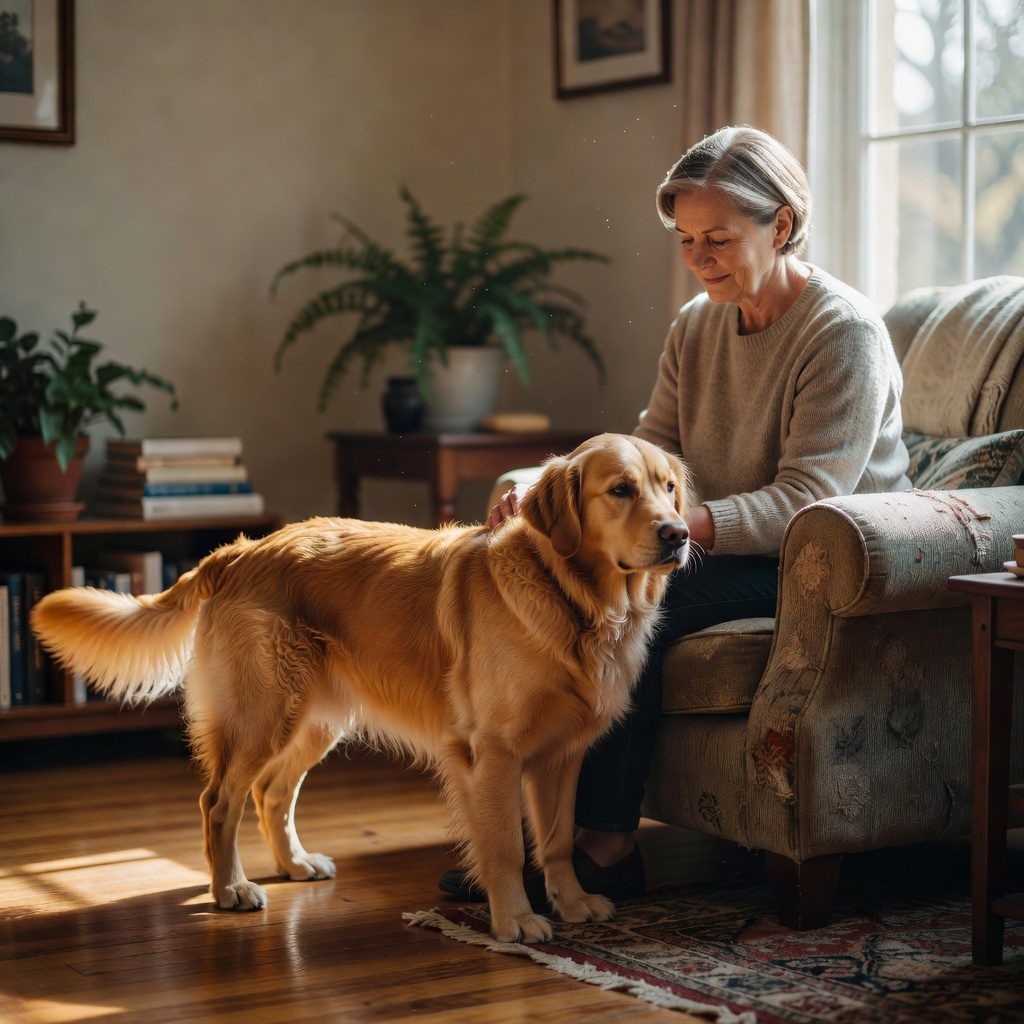
Through posture, movement, distance and expression, dogs give us information about how a moment feels.
No single signal gives the whole answer. Consider the surroundings, the dog’s usual behaviour and what has just happened. When you are unsure, reducing pressure is a sensible first step.
These are possible clues, not diagnoses. Different dogs express themselves differently.
Soft muscles, a relaxed face and freely chosen approach can suggest comfort. Check that the dog can leave and is not simply tolerating attention. Comfort can change as the situation changes.
These can occur during uncertainty or stress, but also in ordinary situations such as tiredness or anticipation of food. If they appear during handling, pause and offer space rather than pressing on.
A suddenly still or tense dog may be uncomfortable. Stop approaching or reaching, avoid staring back and calmly create space. Keep children and other animals away from the situation.
Wagging signals arousal or engagement, not necessarily friendliness. Look at the body’s looseness, tail position, movement and context before inviting an interaction.
Take this warning seriously. Stop the interaction and provide distance without confrontation. Do not punish a growl; suppressing warnings does not resolve the underlying discomfort. Seek professional help for repeated or concerning incidents.
Withdrawal, touch sensitivity, unusual irritability or reluctance to move can be associated with pain or illness. Contact your vet rather than assuming your dog is being difficult.
The aim is not more contact. It is contact both of you enjoy.
Stay relaxed and give your dog room to approach. Avoid leaning over them, grabbing their collar or putting your face close to theirs.
After brief, gentle petting in a place they enjoy, stop. If they move away or seem uncertain, leave them be. Seeking more contact may be an invitation to continue.
Do not disturb a sleeping or eating dog. Supervise children actively, teach respectful distance and separate them whenever safe supervision is not possible.
Reward behaviours you want to see again with something your dog values. Make the task easy enough to succeed, then build gradually.
Fear, guarding, separation distress or aggressive behaviour deserve an individual plan. Start with your vet to consider possible health causes.
Look for a qualified behaviour professional who uses reward-based methods, explains their approach and does not promise an instant fix.
If there is an immediate bite risk, create safe separation and seek prompt professional guidance. Do not test the dog’s tolerance.
Comfort, health and reliable care help make everyday learning possible.