Take the interesting route
A familiar neighbourhood offers changing smells. Allow safe sniffing breaks and turn back if your dog seems tired or overwhelmed.
You will make time for their needs. They will have chances to explore, learn and rest. That is a good place for friendship to begin.
Predictability can help dogs know what to expect, but your day does not need to run like clockwork. Build a flexible rhythm around your dog’s age, health, preferences and ability to settle.
Find Your Daily Rhythm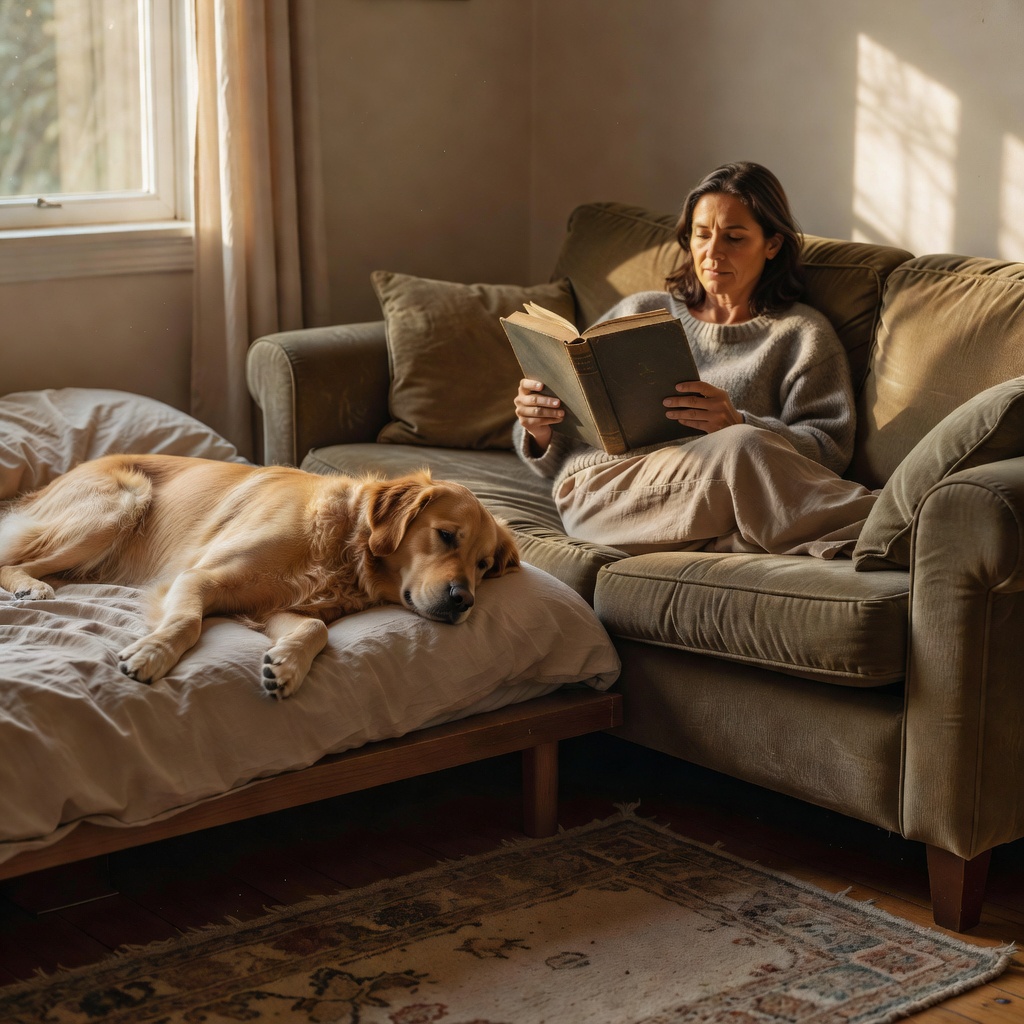
Use these ideas as a starting point, not a fixed schedule. Ask your vet about exercise if your dog has health concerns.
Give your dog a toilet opportunity and fresh water. Offer meals according to their feeding plan. On your walk, keep the lead comfortable and choose a route that suits their confidence and mobility.
Try this: put your phone away for part of the walk and notice what catches your dog’s interest.
Try a short search game with part of their usual food allowance, a safe supervised toy or practice of a familiar cue. Keep water available and give your dog an undisturbed resting place.
Try this: reward a voluntary check-in during play, then let your dog return to exploring.
Meet exercise and toilet needs before winding down. Offer calm company without insisting on contact. A comfortable bed away from household traffic can be just as valuable as a spot beside you.
Try this: keep greetings and bedtime predictable, particularly after a busy day.
Companionship can be lively, quiet or somewhere in between. Let your dog help set the tone.
A familiar neighbourhood offers changing smells. Allow safe sniffing breaks and turn back if your dog seems tired or overwhelmed.
Choose toys suited to your dog’s size and play style. Pause regularly, supervise and stop if either of you is no longer enjoying it.
Quiet company counts. Your dog does not have to perform, cuddle or stay beside you to be part of your day.

A small scene, not a success testThe toy gets put away. The dog chooses a sunny patch. A good game ends with room to rest.
Build comfortable alone time gradually and arrange suitable care for longer absences. There is no single duration that suits every dog.
Persistent vocalising, pacing, destruction or toileting when alone can signal distress. Do not punish it; speak with your vet and a qualified, reward-based behaviour professional.
Consider your working day, housing, costs, other animals and everyone’s comfort. Puppies, adult dogs and older dogs bring different needs.
Ask a reputable rescue or responsible breeder about temperament, health, history and support. It is okay to decide that now is not the right time.
Check your readiness →A dog can enrich everyday life, but companionship is not a medical treatment or a guaranteed answer to loneliness. Your own support network matters, and your dog deserves care even on difficult days.
The best shared days leave space for your dog’s feelings, too.